

FREE GUIDE | COMPANIES AND TRUSTS
Trusts in Australia: how they work, and what's changing
A plain-English guide to discretionary and unit trusts, updated for the proposed 30% minimum tax on trusts.
Free in our community. No credit card, no sales calls. Reading time on this page: about 5 minutes.
What's Changing
The government has proposed a 30% minimum tax on trusts, due to start on 1 July 2028. It isn't law yet. If it goes ahead, many trusts lose most of the tax benefits they used to have, and paying money out to a company (a "bucket company") can mean paying tax twice: once in the trust and again in the company.
For decades, a family trust was one of the best structures in Australia to protect assets and spread income across a family. If the changes go ahead, much of that tax benefit may go.
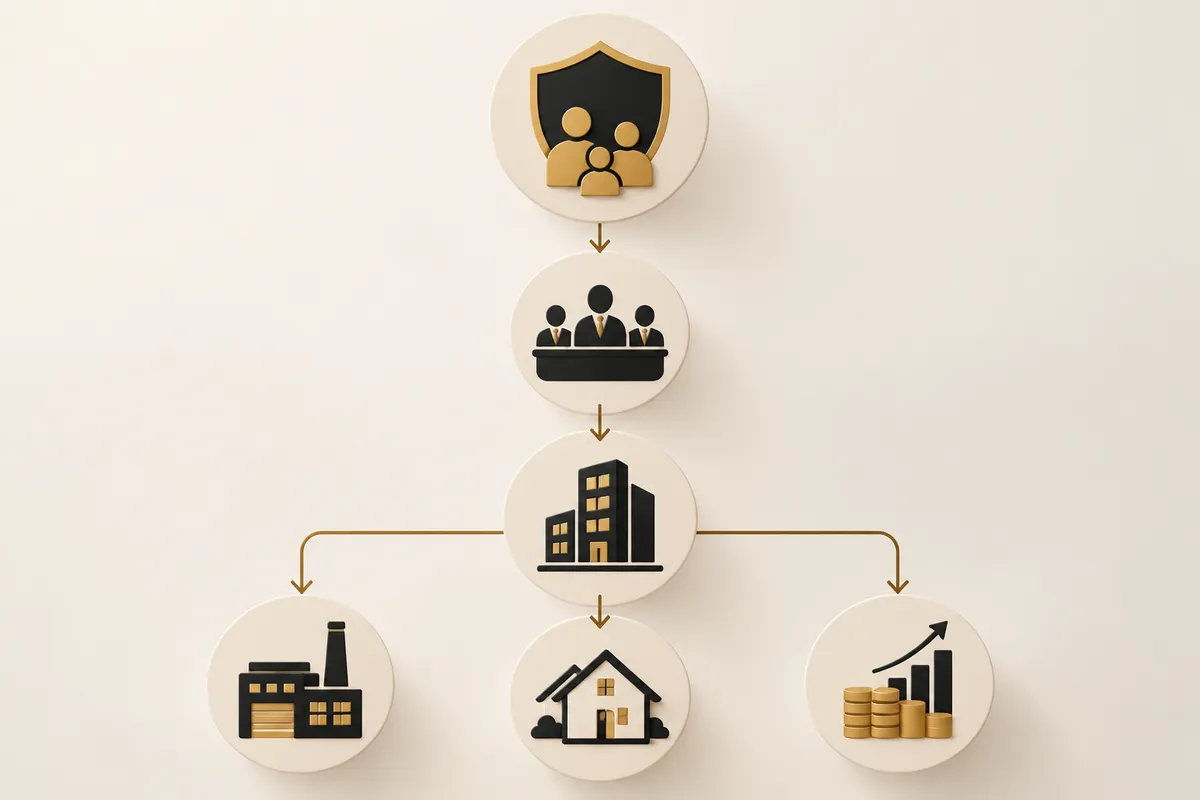
Our recommended structure is now a holding company owned by a discretionary trust, with a company as trustee. The trust's main job becomes protection. Trusts can still suit farmers and primary producers. If you already have a trust or company, now is the time to have it reviewed, before the changes start.
What a Trust Is
A trust is simply where one party holds assets on behalf of others. For example, if John gives Anne $10,000 to invest for Derek, that's a trust: John is the settlor, Anne the trustee, Derek the beneficiary.
The main roles in a family trust:
Settlor: sets up the trust with a small amount. Usually an unrelated person, such as an accountant.
Trustee: holds and manages the trust's assets. Usually a company.
Beneficiaries: the people (and sometimes companies or charities) who can benefit.
Appointor: the real controller, who can hire and fire the trustee.
The Two Main Types
Unit trusts are like companies: each unitholder has a fixed share. They suit unrelated partners.
Discretionary trusts have no fixed shares. The trustee decides each year who benefits. You control the assets without owning them personally, which is why they're popular for asset protection.
Uses, Benefits and Drawbacks
Common uses: running a business, holding property, shares, precious metals or crypto, and trading.
Benefits: low running costs, strong asset protection (though bankruptcy trustees and the Family Court can look through trusts in some cases), and flexibility.
Drawbacks: trusts can't easily keep profits inside the trust, and losses on negatively geared property get stuck in the trust. And under the proposed changes, the tax benefits may shrink a lot.
Moving an existing business or property into a trust can trigger capital gains tax and stamp duty, so get advice first. Setting up correctly from day one is far cheaper.
Get the Full Brochure
Want the full guide?
The full brochure goes deeper, with more examples and answers to common questions. It's free in our community, along with our free training videos, podcasts and news.
Inside the full brochure:
how trusts work, with simple examples
the roles of settlor, trustee, appointor and beneficiaries
the uses, benefits and drawbacks of family trusts
moving money and a business into a trust properly
what the proposed trust changes could mean for you
Where to Next
- Watch the free training: our Free Training Centre has videos on companies and trusts. Join free to watch. Join Free Community
Read the service page: Companies and Trusts
Why holding companies now: Holding Companies
Have a trust already? Get it reviewed: Standard Consultation
Set it up: Company and Trust Set Up, Holding Company Set Up or the Specialist Package
Frequently Asked Questions
Is the 30% trust tax law?
No. It's proposed from 1 July 2028 and isn't law yet. The details may change.
Should I close my trust?
Not without advice. It may still be valuable for protection, for example by owning a holding company.
Can I distribute trust income to my young children?
Generally this is heavily taxed, so it rarely helps. Ask your accountant.

Understand your trust before the rules change
Download the full guide free, or book a call to have your structure reviewed.
Know how it works. Keep more of your hard-earned wealth. Leave a legacy.
Education and strategy for Australians who want to protect what they've built. Online, by Zoom.
Email: [email protected]
Free wealth protection training videos.
No credit card. No sales calls.
START HERE
ABOUT
FOLLOW
Important information. Global Wealth Club provides general education and information only. We are not licensed financial advisers, lawyers or accountants, and nothing on this website is financial, legal, tax or accounting advice. Warren has qualifications in law, accounting and financial planning, and we work closely with licensed professionals as the specialists. Our role is to educate you, help you design your overall strategy, and be the bridge to those specialists. Always get advice from a licensed financial adviser, lawyer or accountant about whether a strategy is right for you. We don't sell financial products or take commissions. Read our full Disclaimer.
© 2026 Global Wealth Club. Founded 2019.